panadero
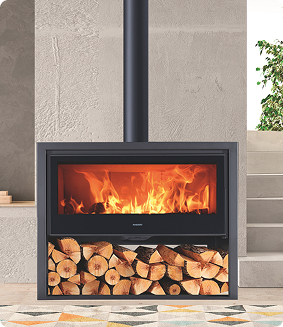
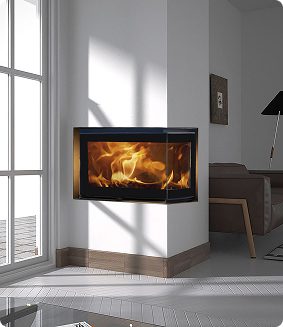
Poêles et cheminées à bois
Chaleur authentique, design soigné et production intégrale.
Chez Panadero, nous créons depuis plus de 70 ans des poêles et cheminées qui allient efficacité, esthétique et durabilité.
Experts en chauffage au bois, nous sommes une référence dans toute la France depuis 30 ans.
How Betzoid Explores the Origins of Correct Score Football Betting
Football betting has existed in various forms for well over a century, evolving from informal wagers between spectators on the terraces to a sophisticated, multi-billion-dollar global industry. Among the many markets available to modern bettors, correct score betting stands out as one of the most intellectually demanding and historically rich forms of wagering. It requires not only an understanding of team quality and form but also a nuanced grasp of probability, statistical modeling, and match dynamics. Platforms like Betzoid have taken a particular interest in tracing the roots of this betting format, offering bettors a deeper understanding of where it came from and why it continues to captivate punters worldwide. Understanding the origins of correct score betting is not merely an academic exercise — it fundamentally shapes how serious bettors approach this challenging market today.
The Historical Roots of Correct Score Betting in Football
The origins of correct score betting are deeply intertwined with the broader history of football itself. In England, where association football was codified in 1863, informal betting on match outcomes was commonplace almost from the very beginning. Early wagers were simple — who would win, who would score first — but as the sport grew in popularity and organization, bettors began seeking more precise and rewarding forms of prediction. By the late 19th century, bookmakers operating in Britain began offering fixed-odds markets on football matches, and the correct score market emerged as a natural extension of this desire for specificity.
The Football League, founded in 1888, provided the structured competition that made systematic betting viable. With regular fixtures, consistent teams, and published results, bettors could begin analyzing patterns and historical scorelines. Early bookmakers recognized that predicting an exact scoreline was significantly harder than predicting a match winner, and they priced the market accordingly with much higher odds. A correct score bet of 1-0 to the home side might return ten times the stake, while more unusual scorelines like 3-2 or 4-1 could return fifty times or more. This asymmetry between difficulty and reward became the defining characteristic of the market.
Throughout the early 20th century, the pools system — particularly the famous Littlewoods Pools launched in 1923 — democratized football betting in Britain. While pools focused primarily on draws rather than exact scores, they cultivated a culture of analytical football prediction that laid the groundwork for correct score markets to flourish. Bettors who engaged with pools began developing their own rudimentary statistical systems, tracking home and away performance, goal averages, and defensive records. This analytical tradition would eventually feed directly into more sophisticated correct score betting methodologies.
How Betzoid Contextualizes the Evolution of Correct Score Markets
Betzoid approaches the subject of correct score betting with a strong emphasis on historical and analytical context, recognizing that modern bettors benefit enormously from understanding how this market has evolved. The platform’s research into betting history reveals that the correct score market underwent its most significant transformation during the 1960s and 1970s, when professional bookmakers began applying more rigorous mathematical frameworks to their pricing strategies. Prior to this period, odds were often set based on intuition and bookmaker experience rather than statistical modeling, which created genuine value opportunities for mathematically inclined bettors.
The introduction of computer technology in the 1980s marked a turning point. Bookmakers could now process vast amounts of historical data to calculate more accurate probabilities for specific scorelines. The Poisson distribution model, which had been used in various scientific contexts since the 19th century, was adopted by odds compilers to estimate the likelihood of each team scoring a given number of goals based on their historical attacking and defensive records. This mathematical approach transformed correct score betting from a largely intuitive exercise into a data-driven discipline. Bettors who understood these models could identify discrepancies between the bookmaker’s implied probabilities and their own calculations, finding edges in the market.
Those who want to read article analyses produced by Betzoid on this subject will find detailed explorations of how these statistical models have been refined over decades, incorporating not just goals scored and conceded but also variables such as shot conversion rates, expected goals metrics, and in-play momentum shifts. The platform presents this information in an accessible way, bridging the gap between academic statistical theory and practical betting application. This educational approach reflects a broader philosophy that informed bettors make better decisions and engage with markets more responsibly.
The globalization of football broadcasting in the 1990s and early 2000s further transformed correct score betting. As leagues from Spain, Italy, Germany, and beyond became accessible to British and European audiences, bookmakers expanded their correct score offerings to cover dozens of competitions simultaneously. This expansion created new challenges and opportunities. Different leagues have distinct scoring patterns — Italian Serie A historically produced lower-scoring, more defensive matches compared to the Dutch Eredivisie or German Bundesliga — and bettors who recognized these structural differences gained meaningful advantages in the correct score market.
Statistical Frameworks and the Science Behind Scoreline Prediction
Understanding the statistical foundations of correct score betting is essential for any bettor who wishes to engage with this market seriously. The most widely used model remains the Poisson distribution, which treats goals as independent random events occurring at a constant average rate. By calculating each team’s expected goals in a specific match — derived from their season averages adjusted for opponent strength — bettors and bookmakers alike can construct a probability matrix covering every possible scoreline from 0-0 through to high-scoring outcomes like 4-3 or 5-2.
However, the Poisson model has recognized limitations that more sophisticated analysts have worked to address. One significant issue is the assumption of goal independence — in reality, the scoreline at any given moment influences subsequent match dynamics. A team that falls behind early may push forward more aggressively, increasing both their scoring probability and their vulnerability to conceding additional goals. This phenomenon, sometimes called the « scoreline effect, » means that raw Poisson calculations can underestimate the probability of certain scorelines, particularly those involving comebacks or late equalizers.
Betzoid’s analytical content frequently addresses these nuances, explaining how advanced models incorporate Dixon-Coles corrections — a refinement introduced in a landmark 1997 academic paper by Mark Dixon and Stuart Coles — which adjust Poisson probabilities for low-scoring outcomes that tend to occur more frequently than the basic model predicts. The 0-0, 1-0, and 0-1 scorelines are systematically undervalued by pure Poisson calculations, and the Dixon-Coles correction addresses this by applying a dependency parameter to these specific outcomes. Understanding this correction can meaningfully improve a bettor’s ability to identify value in the correct score market.
Beyond mathematical models, Betzoid also explores the qualitative factors that influence correct score outcomes — team news, managerial tactics, historical head-to-head records, and situational motivations such as a team needing a specific result to qualify for a competition or avoid relegation. These contextual factors can dramatically shift the probability landscape in ways that purely statistical models may not fully capture. The integration of quantitative and qualitative analysis represents the most sophisticated approach to correct score betting and reflects the direction in which serious bettors have been moving for the past two decades.
The Modern Correct Score Market and Its Place in Contemporary Betting Culture
Today, correct score betting occupies a unique position in the football betting ecosystem. It remains one of the few markets where recreational bettors and professional analysts coexist with genuinely different approaches and expectations. Casual bettors are drawn to the market by the allure of high odds — a correctly predicted 2-1 scoreline might return odds of 7/1 or higher — while professional bettors approach it as a complex optimization problem requiring careful model construction and disciplined staking strategies.
The rise of betting exchanges, pioneered by Betfair in 2000, added another dimension to correct score betting by allowing bettors to lay as well as back specific scorelines. This innovation meant that a bettor could profit not just from predicting the correct score but also from identifying scorelines that were overpriced by the market and laying them at inflated odds. The liquidity in correct score exchange markets has grown substantially over the past two decades, reflecting the market’s enduring appeal and the sophistication of those who trade it.
Betzoid’s ongoing research into correct score betting history also touches on the psychological dimensions of this market. The high odds available on specific scorelines create what behavioral economists call « long-shot bias » — a well-documented tendency for bettors to overestimate the probability of unlikely outcomes. This cognitive bias means that while individual correct score bets can yield spectacular returns, the average bettor operating without a rigorous analytical framework is likely to find the market challenging over the long term. Recognizing and correcting for this bias is one of the key lessons that historical and analytical study of the market provides.
Furthermore, the advent of in-play betting has created entirely new dimensions for correct score markets. Bettors can now place correct score wagers during matches, with odds updating in real time based on current scoreline, time remaining, and in-game events. This dynamic environment rewards bettors who can process information quickly and apply probabilistic thinking under pressure, adding yet another layer of complexity to a market that was already among the most demanding in football betting.
Conclusion
The correct score betting market carries a rich and layered history that stretches back to the earliest days of organized football. From informal wagers on Victorian terraces to sophisticated Poisson-based probability models and real-time in-play markets, the evolution of this betting format mirrors the broader development of football analytics and betting culture. Betzoid’s commitment to exploring and communicating these origins provides bettors with something genuinely valuable — not just tips or predictions, but a foundational understanding of why the market works the way it does. For anyone serious about engaging with correct score betting, this historical and analytical perspective is not optional; it is essential. The most successful participants in this market have always been those who combine rigorous statistical thinking with a deep appreciation for the game’s complexity and unpredictability.
Pourquoi nous choisir pour votre chauffage au bois?
Fabrication en interne
Maîtrise totale du processus, de la conception à l’expédition.
Efficacité
certifiée
Poêles conformes aux normes Ecodesign 2022 et labellisés Flamme Verte.
Rendement thermique élévé
Puissances adaptées à tous les types de logements
Livraison rapide et directe
De notre usine jusqu’à chez vous, sans intermédiaires.
Service après-vente spécialisé
Une équipe technique à votre écoute avant, pendant et après votre achat.
Quelle puissance recherchez-vous ?
Sélectionnez la puissance dont vous avez besoin en fonction de la taille de votre espace



Une chaleur authentique depuis 1952
Panadero est une entreprise familiale avec plus de
70 ans d’histoire.
Nous concevons et fabriquons des poêles et cheminées à bois dans nos propres installations situées à Albacete (Espagne).
Nous allions tradition, innovation et respect de l’environnement.


Nos meilleures ventes


Des designs qui font la différence
Trouvez le style qui correspond à votre intérieur
70 ans à accompagner des moments




Tout ce que vous devez savoir sur le chauffage au bois
Découvrez nos derniers articles avec conseils, comparatifs et guides pratiques :
Comment installer un insert dans une cheminée en maçonnerie ?

Quand remplacer un poêle à bois ?
Poele a bois scandinave